How to Optimize Your Website for Google AI Overviews
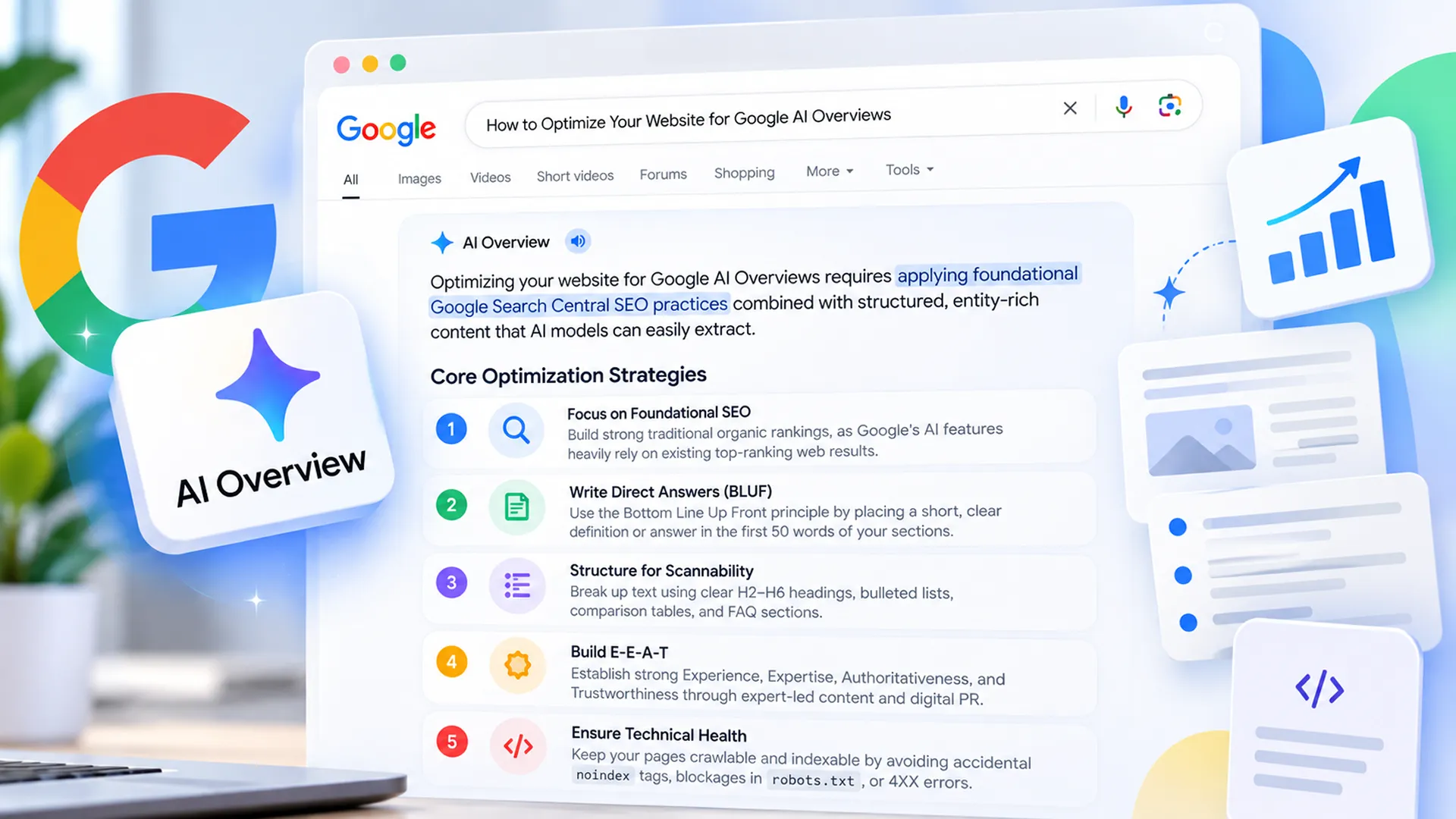
Google Search is changing. People are no longer always presented with a traditional list of blue links when they search for information. For many queries, Google may display an AI Overview that summarizes information directly within the search results.
For businesses that rely on organic search, this creates both a challenge and an opportunity. Getting a page to rank remains important, but businesses also need to think about whether their content is easy for search engines and AI systems to understand, interpret and use.
The good news is that optimizing for AI Overviews does not mean abandoning traditional SEO. Many of the fundamentals remain the same: useful content, strong technical foundations, clear website structure and credible information.
So, what should you focus on? Here are practical ways to prepare your website for Google AI Overviews.
What Are Google AI Overviews?
Google AI Overviews are AI-generated responses that can appear at the top of some Google search results. They bring together information related to a search and may include links to websites where users can explore the subject further.
Unlike a traditional featured snippet, an AI Overview can combine information from multiple sources and address different parts of a question within a single response.
This changes the search journey. A user may get part of the answer directly from Google and then visit one of the cited or linked sources when they need more information.
For businesses, this means organic visibility is no longer only about achieving a particular ranking position. Being a useful and relevant source within the wider search experience is becoming increasingly important.
1. Create Content That Directly Answers Search Questions
One of the simplest improvements you can make is to ensure your content actually answers the questions people are searching for.
Avoid spending several paragraphs introducing a topic before providing useful information. If a section asks a specific question, give the reader a clear answer before expanding on it.
For example, instead of writing:
How long does SEO take?
and following it with a long explanation about why SEO matters, start with a direct response explaining that the timeline varies depending on factors such as competition, website condition and existing authority.
You can then provide the additional context.
This structure makes the page easier for visitors to understand and also gives search systems clearly defined information to interpret.
2. Cover the Topic Beyond a Single Keyword
Traditional SEO strategies sometimes focused heavily on placing one target keyword throughout a page. Modern search requires a broader understanding of the topic.
Suppose you are creating a page about Local SEO. Someone researching Local SEO may also want to understand:
Google Business Profile optimization
Google Maps rankings
Local citations
Customer reviews
Location pages
Local keywords
NAP consistency
Service-area targeting
A useful page should address the important questions and related concepts naturally rather than repeatedly using the same keyword.
This does not mean making every article extremely long. It means covering enough of the topic to satisfy the reason someone searched for it.
3. Make Your Content Easy to Understand
Complicated writing does not automatically demonstrate expertise.
Clear explanations, short paragraphs, descriptive headings and logical sections make content easier for people to read and understand.
Use headings to separate distinct ideas. Lists can also be helpful when information genuinely works better as a series of steps, examples or comparisons.
The goal is not to format every paragraph specifically for AI. The goal is to make the information clear enough that both people and search systems can understand what each section is about.
Avoid adding unnecessary industry terminology when simpler language communicates the same idea.
4. Add Original Experience and Useful Details
If dozens of websites publish essentially the same explanation of a subject, there is little reason for another page to repeat it.
This is where original information can make your content more valuable.
Depending on your business, this might include:
First-hand observations
Examples from projects
Original research or data
Screenshots
Case studies
Product comparisons
Expert commentary
Practical processes
Common problems you have encountered
Lessons learned from real work
For example, an SEO agency writing about technical audits could explain the issues its team commonly discovers during audits rather than simply publishing another definition of technical SEO.
First-hand knowledge can make content more useful and differentiate it from generic articles created by summarizing existing search results.
5. Demonstrate Who Is Behind the Content
Trust matters when people are deciding whether to rely on information they find online.
Make it easy to understand who created your content and why the business or author has relevant experience.
Depending on the type of website, this could include author information, an About page, company details, professional experience, editorial information or links to relevant profiles.
Your service pages should also clearly explain who the business is, what it does and how visitors can contact it.
These elements are valuable beyond AI search. They help potential customers decide whether they are dealing with a genuine and credible business.
6. Strengthen Your Internal Linking
A website should not consist of isolated pages.
Internal links help visitors move between related information and help search engines understand how different pages on your website connect.
For example, an article about optimizing for Google AI Overviews can naturally link to an SEO & AI Search service page. An article discussing website performance could link to your Web Design & Development page.
Use descriptive anchor text where appropriate instead of repeatedly using phrases such as “click here.”
You should also consider the broader structure of your website. Important service and category pages should be easy to reach rather than buried several levels deep.
7. Keep Technical SEO in Good Shape
AI search has not made technical SEO irrelevant.
Search engines still need to be able to discover, crawl, render and index your pages before those pages can perform effectively in search.
Regularly review areas such as:
Indexability
Robots directives
Canonical tags
XML sitemaps
Internal links
Redirects and broken links
Mobile usability
Page performance
Duplicate content
Structured data implementation
You should also monitor Google Search Console for indexing problems and other issues that could prevent important content from being properly discovered.
A strong technical foundation supports both traditional organic search and newer AI-driven search experiences.
8. Use Structured Data Where It Is Relevant
Structured data gives search engines additional machine-readable information about the content and entities on a page.
Depending on the website and page, appropriate schema markup may include Organization, LocalBusiness, Product, Article, Breadcrumb and other supported types.
However, schema should accurately represent content that genuinely exists on the page.
Adding large amounts of unnecessary markup does not guarantee inclusion in an AI Overview. Think of structured data as a way of helping search engines understand certain information more clearly, not as a shortcut to AI visibility.
9. Keep Important Content Accurate and Updated
Outdated information can quickly reduce the usefulness of a page, particularly in industries where products, technology, regulations or best practices change frequently.
Review important content periodically.
Check statistics, external links, product information, screenshots, recommendations and references. Update sections when the underlying information has changed rather than simply changing the publication date.
This is especially important for topics such as SEO and AI search, where features and search experiences can evolve quickly.
10. Don’t Optimize Only for AI Overviews
This is perhaps the most important point. There is no guaranteed formula that will make Google include your website in an AI Overview.
Avoid rebuilding your entire SEO strategy around trying to influence one search feature. Your content still needs to work for traditional organic results, users visiting your website and ultimately your business objectives.
A better approach is to create pages that are technically accessible, clearly structured, genuinely useful and supported by credible information.
Those principles remain valuable regardless of how Google presents the search results.
SEO and AI Search Should Work Together
AI Overviews are changing how information is presented, but they do not remove the need for strong SEO fundamentals.
Businesses should continue improving technical SEO, content quality, internal linking and website experience while also thinking more carefully about how clearly their expertise and information are communicated.
The objective should not simply be to “rank in AI.” It should be to build a website that provides useful answers, demonstrates genuine expertise and gives search engines a clear understanding of your business and content.
Want to Improve Your Visibility Across Google and AI Search?
NY Softech provides SEO & AI Search services to help businesses strengthen their organic presence across traditional and AI-powered search experiences.
From technical SEO and content optimization to site structure, authority building and AI search visibility, our team can review your website and identify areas that may need improvement.
Frequently Asked Questions
1. Can I optimize my website specifically for Google AI Overviews?
There is no guaranteed method for appearing in an AI Overview. However, strong SEO fundamentals, useful content, clear answers, technical accessibility and credible information can help make your website easier for search engines to understand and use.
2. Are keywords still important for AI search?
Keywords remain useful for understanding what people search for, but content should not be built around repeating a single phrase. Focus on search intent, related questions and comprehensive coverage of the subject while using relevant keywords naturally.
3. Is traditional SEO still important with AI Overviews?
Yes. Technical SEO, content quality, internal linking, authority and website usability remain important. AI-powered search changes how information may be presented, but websites still need strong SEO foundations to build sustainable organic visibility.

You May Also Like
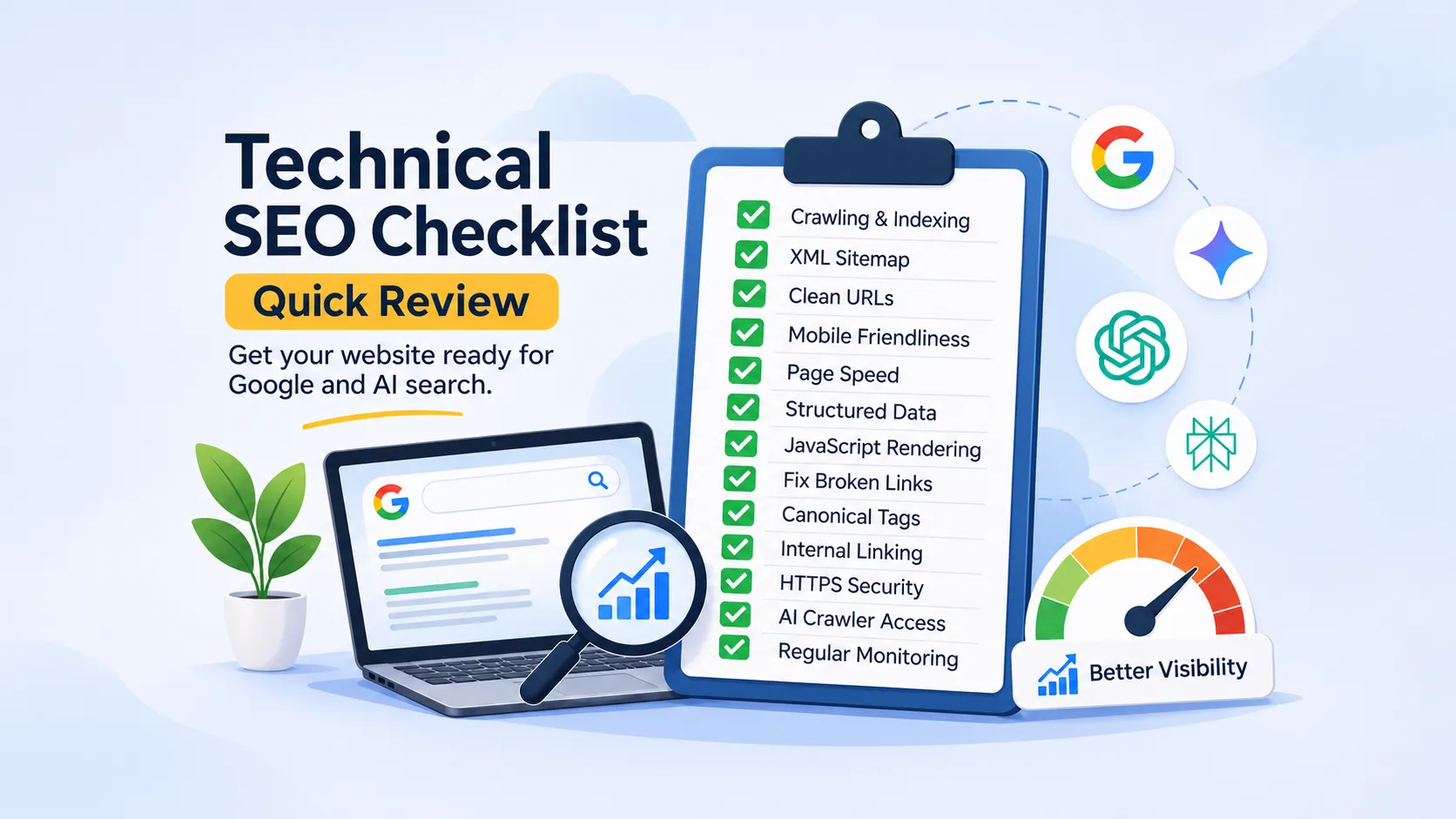
Technical SEO Checklist for Better Google and AI Search Visibility
Read Article
Top Deal Apps and Platforms to Get Your Restaurant Noticed in Tricity
Read Article
How Pharmaceutical Companies Can Generate B2B Leads Online
Read Article