5 Common Mistakes That Increase the Cost of Real Estate Leads
Generating leads is one of the biggest priorities for real estate developers, builders and property consultants. Google Ads, Meta Ads and other digital channels make it possible to reach thousands of potential buyers, but generating more leads does not always mean getting better results.
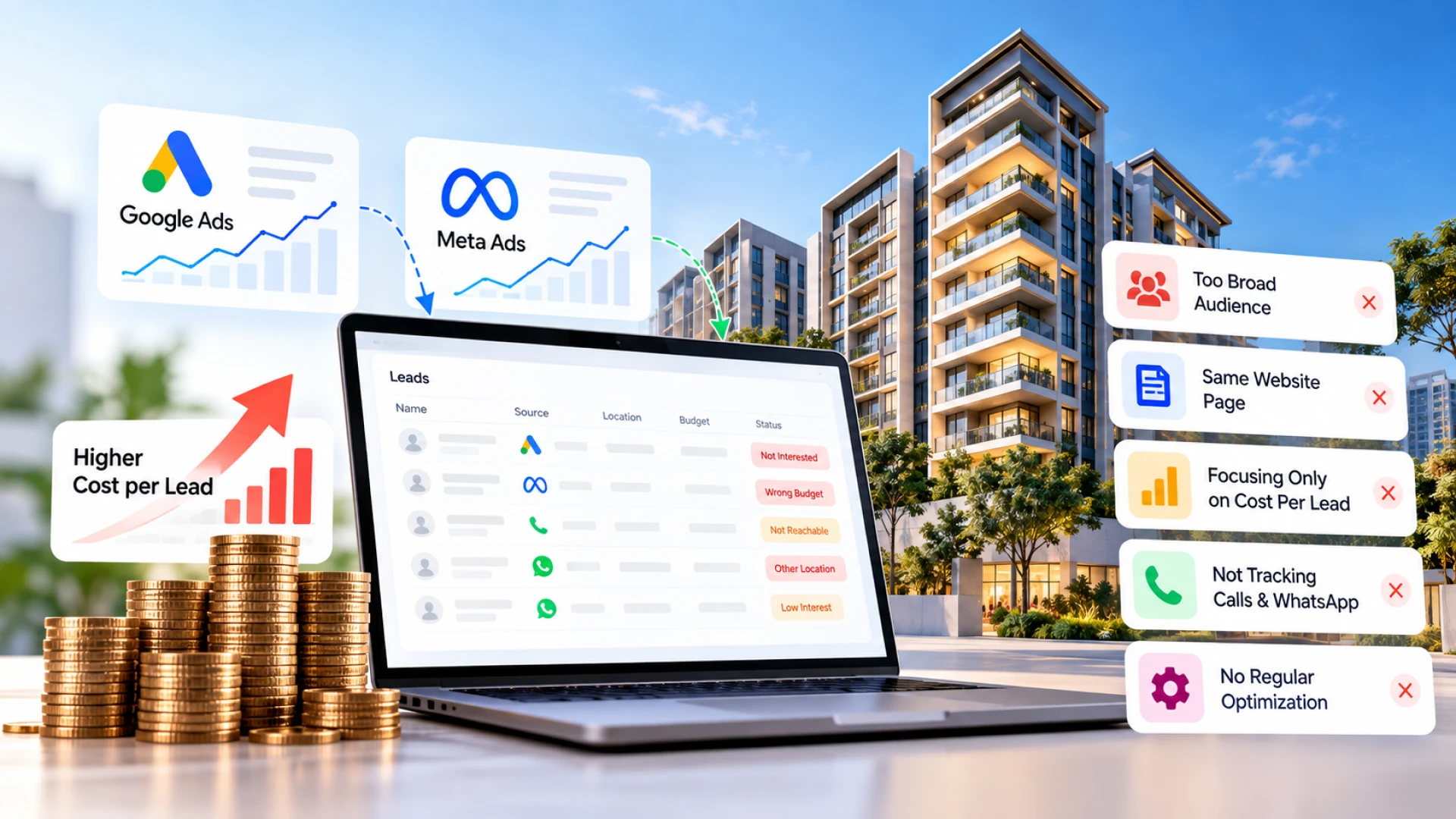
A campaign may appear successful because enquiries are coming in regularly. But when the sales team starts following up, they may find that many leads have the wrong budget, are interested in another location, cannot be contacted or simply have little interest in the project.
When this happens, increasing the advertising budget is rarely the first thing to consider.
Small mistakes in audience targeting, campaign structure, landing pages and tracking can increase the amount you spend for every useful property enquiry.
Here are five common mistakes real estate businesses should look for.
1. Targeting Too Broad an Audience
Trying to reach as many people as possible might sound like a good strategy, but it can quickly increase advertising costs.
Property requirements are highly specific. Someone searching for an affordable 2 BHK apartment may have very different expectations from a buyer looking for a premium villa. Location, budget, property type, possession status and purpose of purchase can all affect buyer interest.
Your advertising should take these differences into account. With Google Ads, review the searches triggering your ads rather than simply bidding on broad property-related keywords. If your project is in a specific location, searches from people interested in completely different areas may have limited value.
Meta Ads requires a different approach because people are not necessarily searching for a property when they see your advertisement. Your audience, location, creative and message therefore need to work together.
The aim should not simply be to generate the largest number of clicks.
It should be to reach people who are more likely to be interested in the project you are promoting.
2. Sending Every Campaign to the Same Website Page
Imagine someone sees an advertisement for a particular residential project in Gurgaon, clicks it and arrives on the developer's general homepage.
They now have to find that project themselves. Some visitors will do it. Others will simply leave.
The page someone reaches after clicking an advertisement should closely match what attracted them in the first place.
For major projects or campaigns, a dedicated project page or landing page can clearly present information such as:
Project location
Property configuration
Main features and amenities
Pricing information, where appropriate
Floor plans
Project images
Location advantages
Enquiry form
Phone number
WhatsApp option
The advertisement and landing page should also use consistent messaging.
If your advertisement promotes a particular project, location or offer, visitors should immediately see that information after clicking.
A good landing page is not about adding as much content as possible. It is about giving potential buyers the information they need and making the next step clear.
3. Looking Only at Cost Per Lead
Cost per lead is useful, but it does not tell the complete story.
Suppose one campaign generates 100 enquiries at ₹500 each while another generates 50 enquiries at ₹800 each.
At first glance, the first campaign appears better.
But what if only five leads from the first campaign are relevant, while 20 from the second campaign result in meaningful conversations or site visits?
The cheaper campaign may actually be costing the business more for every useful opportunity.
Marketing and sales teams therefore need to communicate.
Sales feedback can help identify:
Which campaigns generate relevant buyers
Which locations produce stronger interest
Whether enquiries fit the expected budget
Which projects attract better leads
Which sources contribute to site visits
This information can then be used to improve targeting and budget allocation.
Instead of asking only “What is our cost per lead?”, also ask “What kind of leads are we generating?”
4. Not Tracking Calls, Forms and WhatsApp Enquiries
Real estate buyers contact businesses in different ways.
Some fill out an enquiry form. Some call immediately. Others prefer WhatsApp.
If your reports only count website form submissions, you may be missing a significant part of campaign activity.
Proper conversion tracking can help you understand which marketing activities are encouraging potential buyers to contact you.
For example, you may discover that one campaign generates fewer forms but considerably more phone calls.
Without tracking those calls, you might incorrectly assume the campaign is underperforming.
Tracking can also help answer questions such as:
Which campaign generated the enquiry?
Which advertisement did the buyer interact with?
Which project receives the most interest?
Which channel generates more actions?
Which landing pages encourage more enquiries?
Tracking alone will not improve lead quality. However, it gives you better information for deciding what to change.
5. Launching Campaigns and Leaving Them Unchanged
Digital advertising is not something that should simply be set up and left running for months.
Buyer behaviour changes. Competitors change their advertising. Search terms change. Ad creatives can become less effective after audiences repeatedly see them.
Campaigns therefore need regular attention.
For Google Ads, this can include reviewing:
Search terms
Keywords
Negative keywords
Locations
Devices
Ads and assets
Budgets
Conversion performance
For Meta Ads, you may need to test:
Audience groups
Images
Videos
Headlines
Ad copy
Formats
Landing pages
Not every change will improve performance. Testing allows you to gradually understand which combinations work better for your projects.
The important point is to make changes based on data rather than assumptions.
Don’t Forget What Happens After the Lead Arrives
Even a well-targeted marketing campaign can be let down by poor follow-up. Property buyers may contact several developers, brokers or projects during their research. If an enquiry sits unattended for too long, the potential buyer may already be speaking with someone else.
Make sure there is a clear process for receiving, assigning and following up on leads from your website, Google Ads, Meta Ads and other sources.
Marketing and sales should not operate completely separately.
Feedback from the sales team can be one of the most useful sources of information for improving campaign quality.
Better Real Estate Leads Start With Better Campaign Decisions
There is no single cost per lead that is right for every real estate project.
Location, property type, pricing, competition, buyer demand and advertising budget can all affect performance.
Instead of chasing the lowest possible lead cost, focus on building a system that helps you reach relevant buyers, understand where enquiries are coming from and continuously improve based on lead quality.
That can give you a much clearer picture of whether your real estate marketing is actually working.
Need Help With Your Real Estate Marketing?
NY Softech provides real estate marketing services for developers and builders, including Google Ads, Meta Ads, SEO, social media marketing, landing pages and conversion tracking.
If your campaigns are generating expensive or low-quality enquiries, our team can review your current setup and identify areas that may need improvement.
Frequently Asked Questions
1. What is a good cost per lead for real estate?
There is no fixed benchmark that applies to every project. Lead costs vary depending on property type, location, competition, targeting, advertising platform and buyer demand.
2. Which is better for real estate leads, Google Ads or Meta Ads?
Both can work differently. Google Ads reaches people actively searching for properties, while Meta Ads can help reach and engage potential buyers based on audience and location targeting.
3. Why am I getting poor-quality real estate leads?
Poor lead quality can come from broad targeting, unclear ads, weak landing pages or focusing only on lead volume. Reviewing sales feedback alongside campaign data can help identify the problem.

Kashish Leekha
PPC & Social Media Specialist
Kashish Leekha is a PPC and social media specialist at NY Softech, focused on helping businesses grow their online presence through targeted paid campaigns and engaging social media strategies. She works across Google Ads, Meta Ads, campaign optimization, audience targeting, and social media marketing to create data-driven strategies that generate meaningful results for brands across different industries.
You May Also Like
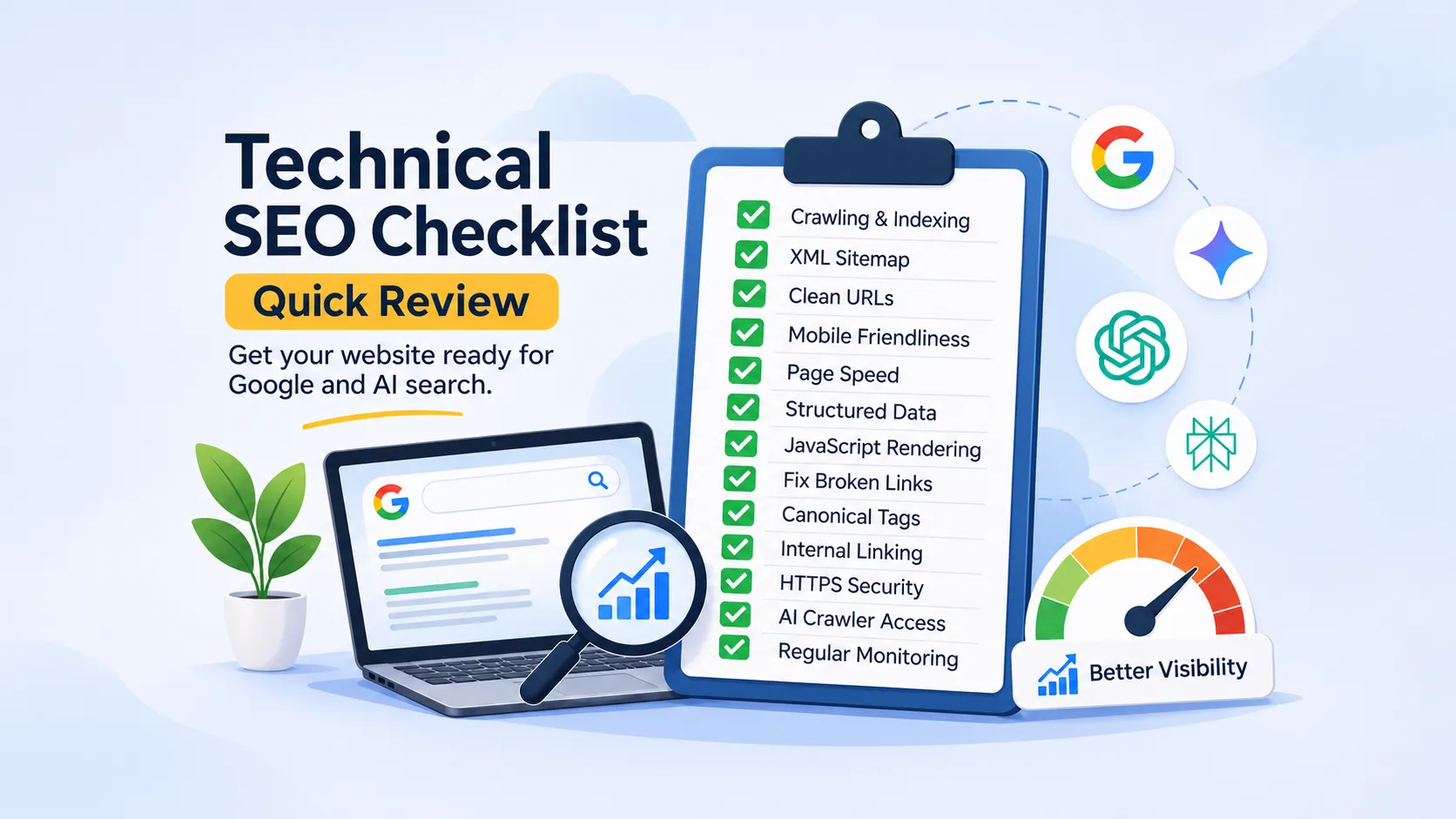
Technical SEO Checklist for Better Google and AI Search Visibility
Read Article
Top Deal Apps and Platforms to Get Your Restaurant Noticed in Tricity
Read Article
How Pharmaceutical Companies Can Generate B2B Leads Online
Read Article